
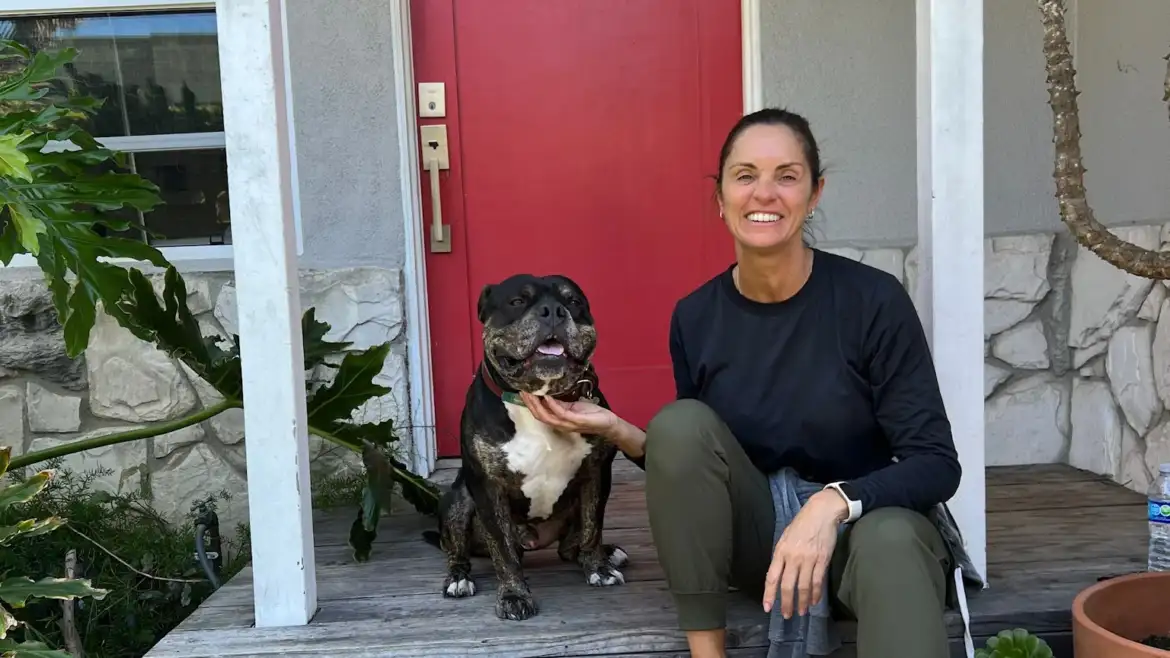
If you have followed me for a bit you are aware that I work with dogs in Dog Psychology. I see, treat and communicate with them in a way that makes sense to them. That, in a nutshell, is what Dog Psychology is. We work within the psychology of dogs. Interacting with them as closely as they interact with each other: energy first and body language second. For some that may sound like a no-brainer; after all why treat dogs in any other way than as a dog? For many that sounds absolutely preposterous and maybe even mean:
“What do you mean the dog is not my baby? Of course they are. I coddle them and treat them as my child. I love them as if they were my own flesh and blood.”
Yes, I have heard that many times and can absolutely understand the sentiment. Nevertheless in my book, when one truly loves another they will do their up most in order for the other to be the best version of themselves. Treating a dog like a human is not allowing them to be that. It is actually a form of disrespect since we expect the other to be more like us and not who they were born to be.
I completely understand the sentiment that the loving way is to treat a dog in the most humane way possible. That is a honorable sentiment and one that should be used when dealing with any being on Earth. That, however, is a completely different idea than using human psychology to communicate with and treat an animal that has its own needs and different ways of fulfilling and expressing those needs. We humans are almost hardwired to think that if something works for us, it must work for other beings as well. But that is a faulty premise. Think about it, if you treat a gorilla like a chicken you will not be alive for very long. No one acts wildly around a horse, if they do and get kicked, any sane human will say that the mistake was of the human not of the horse. Most of us are acutely aware of the differences between us and other animals so as to keep ourselves safe. But not with dogs. With dogs all that understanding goes out the window. We, all of sudden, become experts in the psychology of dogs because we know them so well and we know ourselves so well.

That cognitive dissonance is at the root of many a fractured relationship between dogs and their owners’. The belief that one knows their dog better than anyone else because of shared experiences. That might be the case when dealing with human relationships but it doesn’t translate when using human psychology to communicate with and understand one’s own pup. In dog psychology spending time together doesn’t equal trust or respect. Since dogs react to their environment using instinct alone, spending time together will simply allow the dog to react to however the owner is acting and reacting to the world around them. Speaking with dogs usually does more harm than good. They are born blind and deaf, they only start “using” their ears to listen to their surroundings 21 days after they are born. When we constantly talk to our dogs we are actually making them more confused than at ease.
When our dogs are presented with unknown situations that might make them a bit unsure, humans tend to coddle, speak to, or comfort the dog. It is a human instinct for sure. Since we do it amongst ourselves why wouldn’t it work with our dogs? However, thinking back about the gorilla and chicken scenario. Just because one can shoo a chicken away, does not mean that it will work with a gorilla. It is not because something works for us humans that it will work for dogs. Dogs live in the moment, reacting to energy and body language. If one coddles a dog that is unsure, what they are implying (for the dog) is that they agree with that state of mind. Being unsure gets you petted, therefore the human agrees with the state of mind the dog is in. What is intended to help becomes a self-fulfilling cycle since the dog understands that this is what the human wants: being unsure is good. Remember: you get what you pet.

Another example is when our dogs are reluctant to do something, like hop in the car. Many times the human will agree with that fight (state of mind) of the dog simply by teaching them that if they fight they will be picked up, given a treat or the human will simply give up and not ask them to do something completely safe but a little hard. It teaches the dog that a fight-flight state of mind gets rewarded. The human cannot be trusted to teach something, simply because the human surrenders or rewards a dog in a fight state. Talking to the dog at these moments of “stress” also does the opposite of calming them, it actually imprints the human’s voice with the state of mind that the dog is in at that moment. The best course of action in these situations is to teach the dog how to get in and out of the car using tools, a calm, confident, and joyful energy. Making that an experience of togetherness. The human guiding an unsure mind with a quiet but determined demeanor. Once one teaches a dog that it is not because something is hard that it can’t be done, the bond between the two species grows exponentially. That is Dog Psychology.
Remembering that compassion is a wonderful human trait, if one truly wants what is best for their pup, then getting informed about what makes a dog feel confident and at ease is the best course of action. Human Psychology works for us humans. We are rational beings that have an ego that can absorb and differentiate between us and them. Dogs don’t have that. They are instinctual beings that respond to the world the only way they know how: as dogs. So if you truly want to have the best relationship possible with your pup start by treating them as a dog. Fulfill their needs as dogs. Then one can apply all the human traits like hugging, kissing, dressing them up, etc. Because they are fulfilled as the wonderful creature that they are.