I had a client once who was at the end of her rope with her dog. She expressed to me that she had tried everything, including multiple trainers but her dog’s separation anxiety was out of control. Her dog would bark, screech, and whine at all hours when she was not home and neighbors were starting to lodge complaints. The dog hurt herself trying to get out of the house and her vet told her to consider medication. When I asked her about crate training her dog, she told me that a previous trainer said her dog would never be able to be crated. She was too damaged by it. My question to her was: “What did the trainer say would happen? Would the dog explode?” She said the trainer never explained what would happen if a crate and the dog were to meet.
I tell this story, first to illustrate that some trainers and clients have a hard time accepting crate training as a good thing. Second to highlight the fact that when a trainer tells you that your dog will never be able to do X, Y, or Z be sure to get a second opinion. Crate training is one of the most helpful things one can do for their dog in this modern age of dog ownership. We live in ever more crowded environments, with higher than ever expectations about where our dogs should be allowed to accompany us and with an elevated concentration of both people and pups around us. Crate training our dogs allows them to have a place of their own, where they can relax safely while being able to participate in more adventures with us. It prepares them for situations when they will need to be in a crate, be it in a vet, grooming or boarding environment or even in some situations, traveling. So let’s break down the easiest way to crate train your dog.
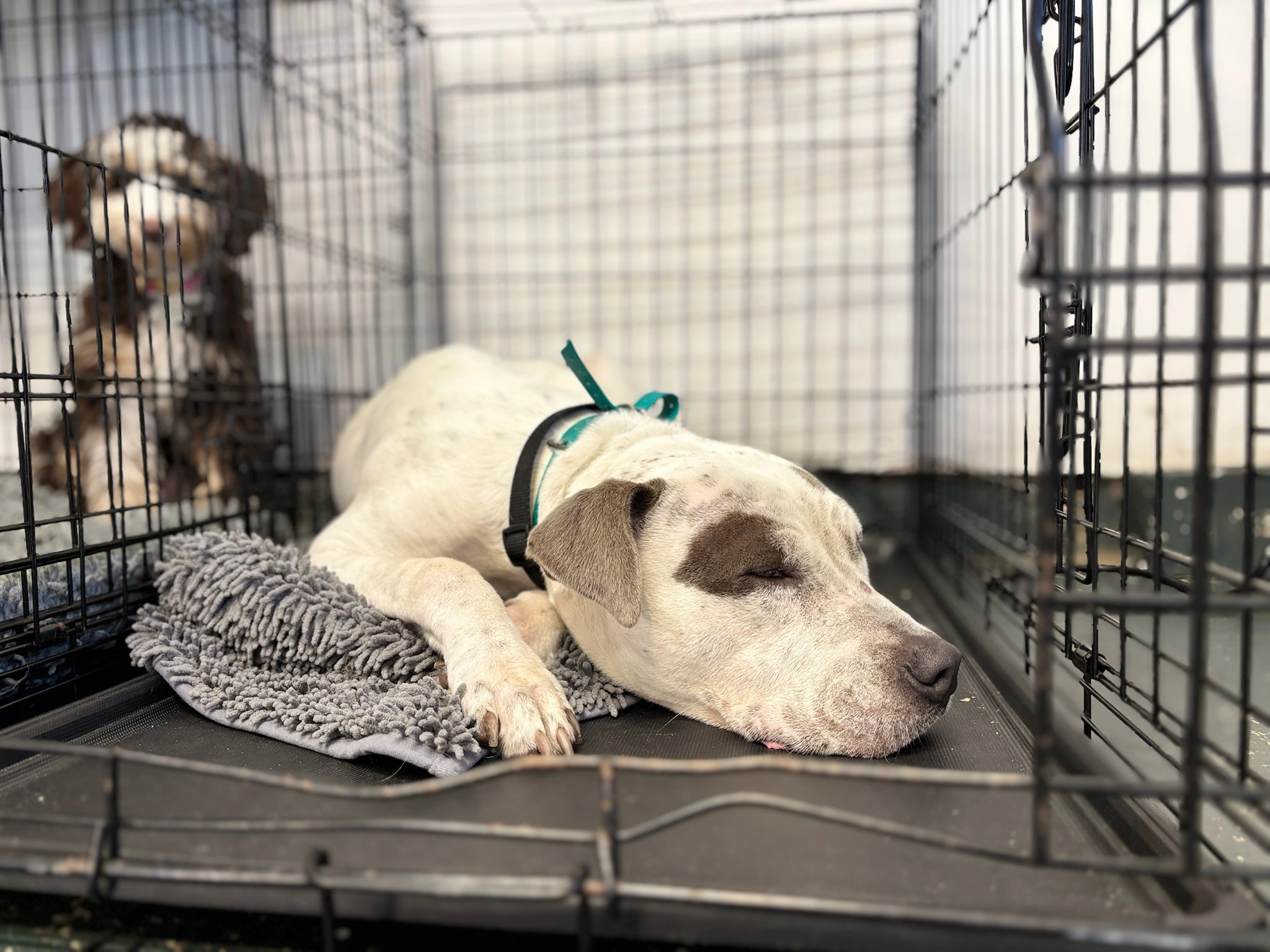
When people say their dog “hates” the crate, it often reflects how they (the human) feel about it. A crate is a den, a small, cozy and sheltered space where a dog can feel safe in. All Canids give birth in dens, it is imprinted in them since birth. While domesticated dogs have little need for a den when they live with us, they will still seek a smaller space, that is tucked away and safe to have their pups. That is instinct. Very much like us humans placing our very young in a crib or bassinet to assure their safety, canines use their dens to ensure their youngsters’ well-being. Saying that a dog can never be placed in a crate, means that one is overriding biology and instinct simply by focusing on a single moment’s response. Of course, like most things, how you introduce an object, place or tool will be of great importance in how that dog imprints on that place, tool or object. If one shoves a dog in a crate while the pup is in a state of fight or flight then immediately closes the door and walks away, that crate now becomes a trap. Not a place of safety, but somewhere or something that one needs to fight with or flee from. Hence why it is so important that the imprint created with any object or tool to be used is one of surrender.
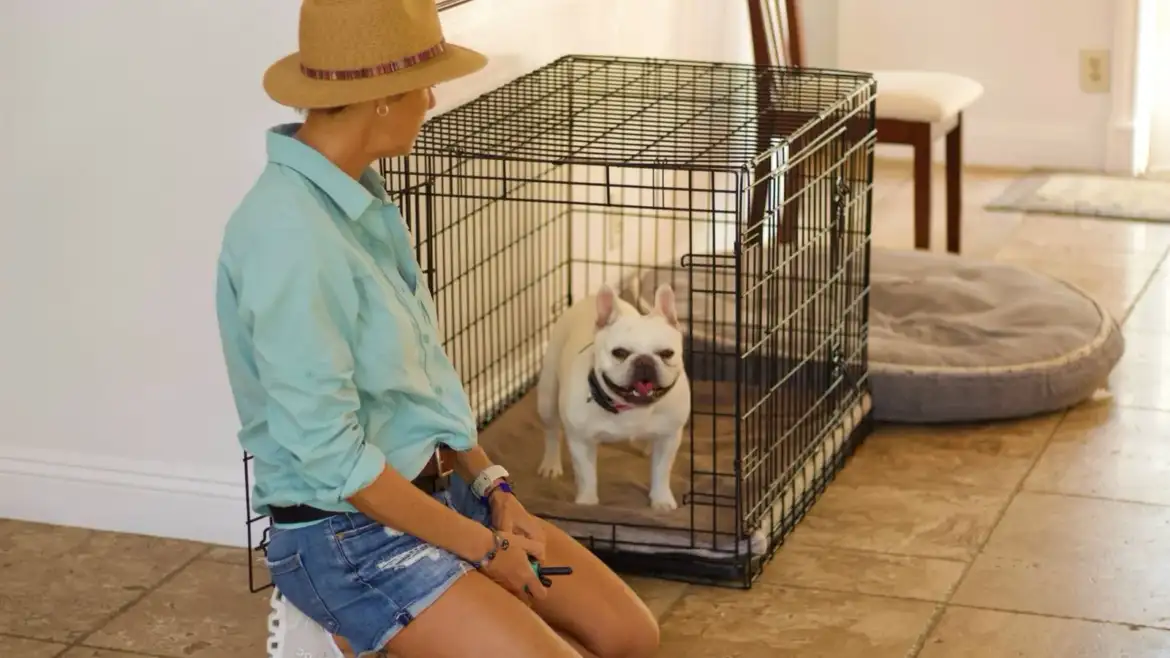
The easiest way to introduce a dog to a crate is simply by having them on a leash and inviting them to walk into the crate. Using a dog’s natural curiosity, allow them to explore the inside of the crate and then invite them out with the leash. If the dog is reluctant to get in, placing a treat or feeding the dog in the crate will quickly ease that unsureness. The intention is not to immediately close the crate once the dog is inside, but to simply get her used to going in and out. Or even eating their food inside it. Once the pup is used to going in and out, invite them in and do not allow them to come out. One can simply sit in front of the crate, close the door or block the dog from coming out. The intention is for the dog to surrender to the fact that they are now staying in the crate. Once the dog sits down or (even better) lies down, then invite them out. Repeat this many times, until the dog simply lies down on their own once you invite them into the crate. Then close the door. This might trigger some pups to get up again, just stay close to the crate but not focus on the dog. Maybe watch your favorite TV show, play a game on your phone, or read a book, all the while staying in somewhat close proximity to the crate and the dog but allowing them to figure out that they are not going to come and follow you. Eventually start giving more distance from the crate, while ignoring your dog. Once they completely relax and give up trying to come out, then let them out.
Practice this consistently, creating longer times that the dog stays in the crate, first while you are still in the house. Let the pup get used to relaxing while you are going about your daily routine. Then, eventually, leave the house. If you don’t trust that your dog will be ok, go out for five minutes, come back, but do not let your dog come out. Wait until they are calm before you invite them out. Teach them that the way to come out of the crate is by being calm. Then do it again and start lengthening the time you stay out. Eventually your dog will start going to the crate on their own seeking that feeling of calmness. That is what happened to the dog in the beginning of this blog. Yes, she was able to be in a crate. Not only that, she eventually sought out the crate or bed when she was feeling either overwhelmed or tired. No medication or force needed. She can now stay home in her crate while her owner is at work.
One of the hardest things for dogs to learn is that they will not follow their humans everywhere. Crate training is one of the most effective and easiest ways of teaching them that. It helps to curb separation anxiety since it teaches the dog that when they are in this space they can surrender, relax and all will be well. If we take the time to teach them what a crate represents by using distance – duration – distraction while they are in the crate, then we can prepare them, not only for when we leave, but also for when we need to leave them somewhere new. If the imprint of the crate (created by us and assisted by their instinct) is one of surrender, how much easier will it be when our dogs have to be in a crate at the vet, when recovering from surgery, or when traveling? It is up to us to take the time to teach them what the crate represents. Most dogs will gladly go in a crate after a long walk or when they are tired. So before starting any of these exercises go out with your pup and physically exercise them. The crate then becomes their refuge to rest after a long day’s work.
Happy training!
Do you need help training your dog? Fill out the questionnaire to get rates.