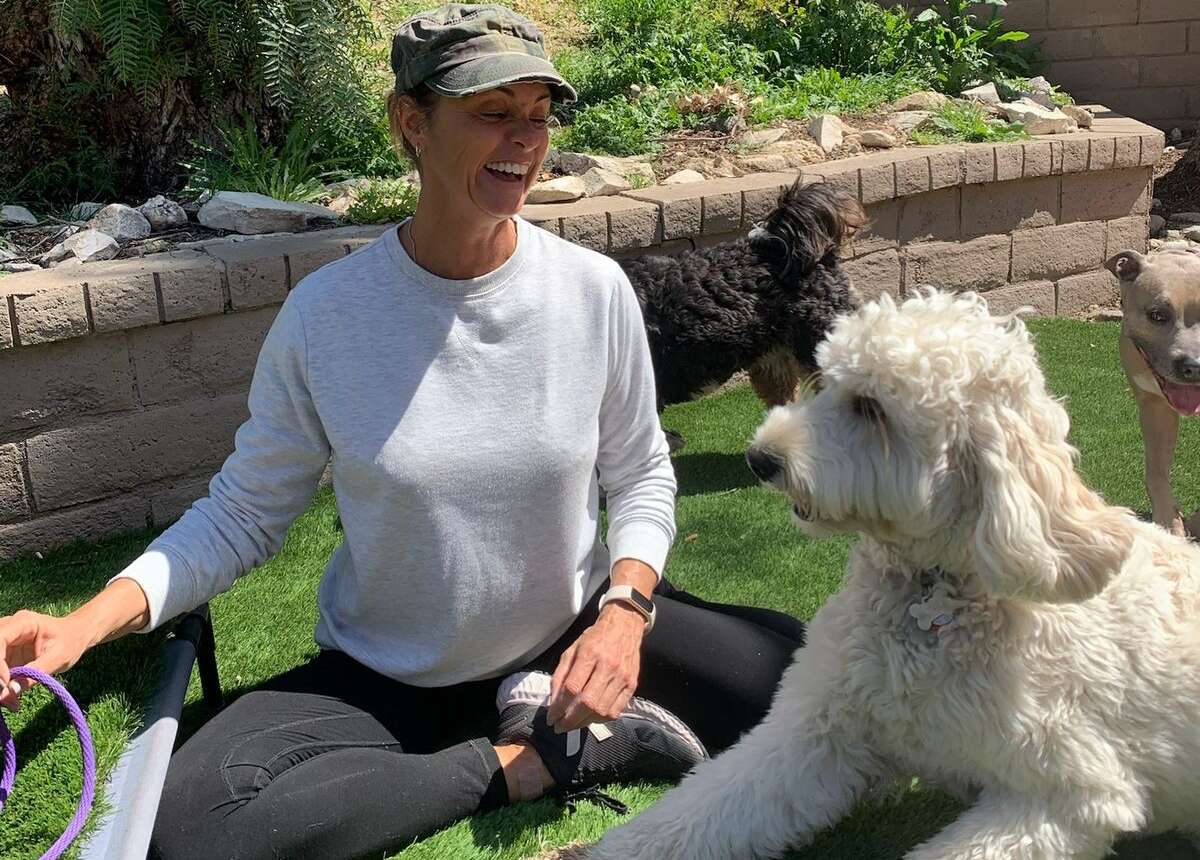

One of the best things about my job is that I get to help humans and their dogs have a better relationship. The human and dog bond is a very specific kind of connection. Since we evolved together, dogs, more than any other domesticated animal, have a way of revealing who we truly are at our core. They are a reflection of us, the good and the bad. The amazing part of my job is that I get to connect with my clients in a very deep way through our weekly sessions exactly because of that unique human – dog bond. Conversations that deal with dog behaviors can often reveal a lot of “hang ups” on the part of the human. The fact that my clients trust me enough to share a lot of their insecurities and fears means the world to me. I get to learn almost as much as they do in our sessions. It is so rewarding to see people having aha moments when we talk about their dog’s behavior and how sometimes they are, unknowingly, reinforcing unwanted actions from their dogs. One of my clients recently said to me that her aha moment came when I told her, in Dog Psychology, you get what you pet. Meaning that with dogs, the state of mind you give energy to, is the state of mind you reinforce. She told me I should make t-shirts with that saying, because it dissects exactly what she was doing with her new dog.
Unlike humans, dogs do not understand empathy. Empathy requires a sense of self which dogs do not have. So whenever we try to comfort a scared dog, by petting them, by talking to them, by giving energy to that state of mind of fight, flight, avoidance, we are essentially telling the dog that we agree with what they are doing. Yes, it is hard not to feel bad for a dog that is scared or showing signs of discomfort. Our humanity aches for comforting a mind that is unsettled. Nevertheless when we realize that, by doing that we are actually perpetuating the state of mind that we don’t wish to continue, then our decision to act differently comes a little easier. The best course of action to help a scared dog, is to have a confident and calm energy, guide them to a different place (be it physically or mentally) through their nose. Since the nose controls 60% of the brain, you get the nose, you get the dog. Once the dog is in a calmer state, then one can share affection. We allow the mind to be in a surrender or settled state before we reward it.

Another perfect way to get what you pet is to switch the imprint of a dog greeting humans. If you have a dog that jumps, whines, barks, pees when they meet someone, then practice not acknowledging the dog as soon as you get home. Give them time to quiet down before you say hi. If they sleep in a crate, allow them to completely calm down before allowing them to come out. Guide them outside so they can relieve themselves, and then greet them. If they are outside dogs then let the enthusiasm simmer down before going out and meeting them. When you greet them, practice no touch, no talk and no eye contact until you experience a calm dog. Then share affection. With the rule of thumb being either pet or talk. For dogs that are overly excited in meetings, doing both can actually defeat the purpose of achieving calmness in greetings. It is too much. Moreover, if you pet a dog, practice taking energy, not adding. This is not a technique or conscious thing. It is an intention of calmness, of sharing not adding. Practice doing whatever taking energy means to you and see if that switches the way your dog greets you.
You get what you pet is a great way to remember that when we want to share affection with our dogs, intention should always come first. Petting a dog to calm them down will teach them the complete opposite. Holding a dog when they are acting crazy will reinforce the behavior and teach them to do more of the same so they can receive attention and energy. Working with dogs and sharing affection when they are relaxed and calm will teach them that you agree with that behavior and state of mind. Practicing calmness before feeding time will coach your pup that food and tranquility go hand in hand. Making sure your dog can lay down relaxed by their favorite toy before starting play allows for them to disengage from the object much faster and can curb ball or toy obsession.
Try practicing the “you get what you pet” for a few weeks and see how that changes your dog’s behavior. Take note of how long it took in the beginning for your dog to settle down and how with practice the time starts becoming shorter and shorter. And when someone asks if they can greet your dog, practice telling the person to give it a beat until the dog calms down and then share affection. We can all practice self control while doing what is best for our pups. Your dog will thank you.