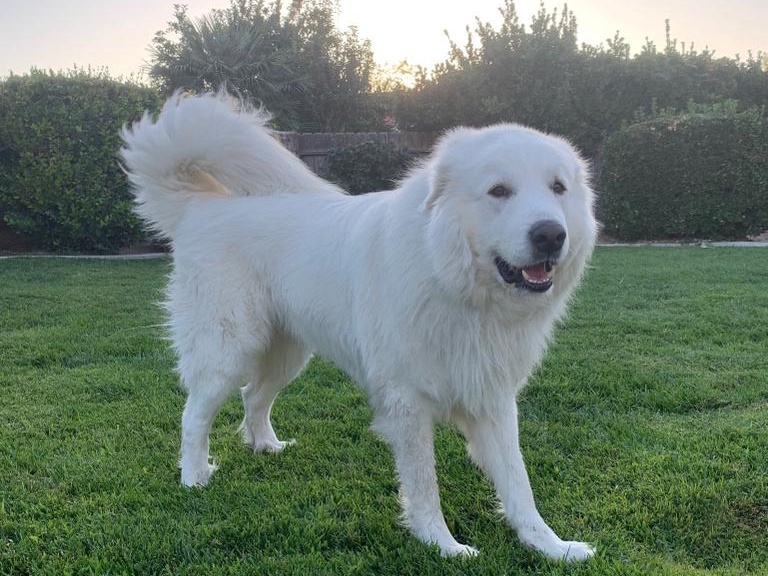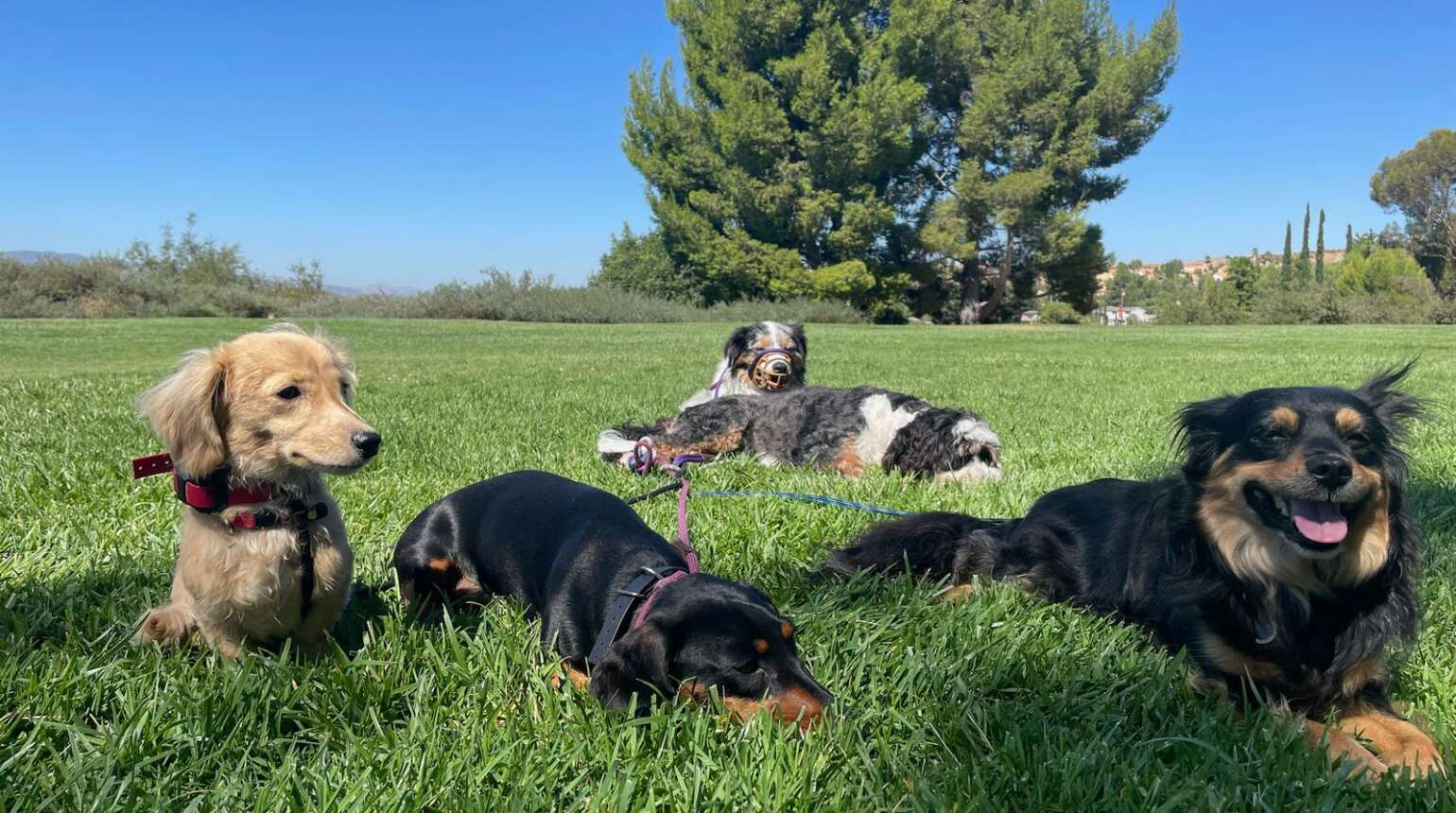
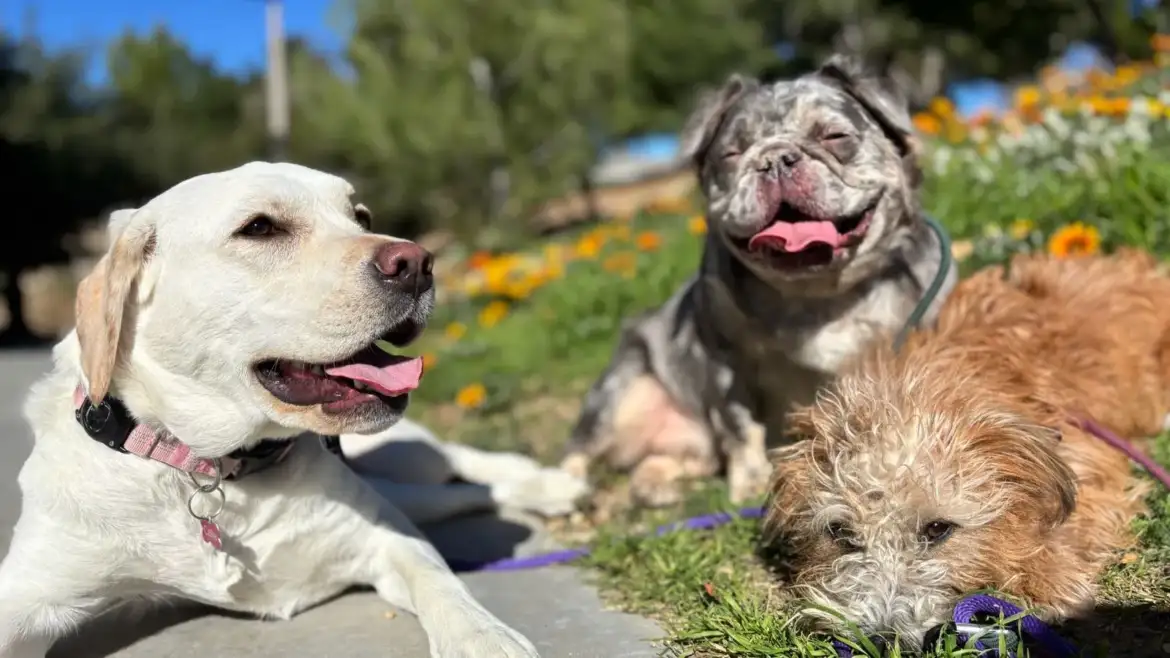
If you are new here, you might not know this about me, but in 2015 I co-created a prison program called Pawsitive Change. In that program we taught inmates how to train dogs. The dogs lived in the prisons with the inmates for three months. At the end of those three months of training the dogs got adopted out. It is one of the things I am most proud of having created. Not only were lifelong friendships created but we were able to help countless dogs being adopted by loving families. What surprises many people however, was the difficulty in getting a program like that started in the first place. There are hundreds of moving parts in rescue, in prison and in training… getting them all to align was a feat of ingenuity, willpower and hard fought rules and boundaries. One of the most fundamental of these rules was that not everyone in prison would be allowed to pet the dogs. The dog handlers (i.e the inmates) would be the ones responsible for deciding if their pups were ready to be pet by a stranger or not. Did I mention this was a prison? Did I mention that this included correctional officers as well as prison staff? How in the world would an inmate tell a correctional officer that they weren’t allowed to pet a dog? How would they tell other inmates ‘no’ without creating tension? “I don’t have an answer to that” was what I said to the union representatives. “All I know is that I am responsible for the well being of the dogs being brought in here. If I am unable to advocate for them, if the participants of the program are unable to advocate for them, then there is no program”. To make a very long story short, not only did the union find a way to impose that rule in the Operational Procedures of the program, the participants of the program found a way to advocate for their pups without creating a riot. So I ask you the same question, are you able to advocate for your dog? What does that even mean, and can one do it without creating friction?
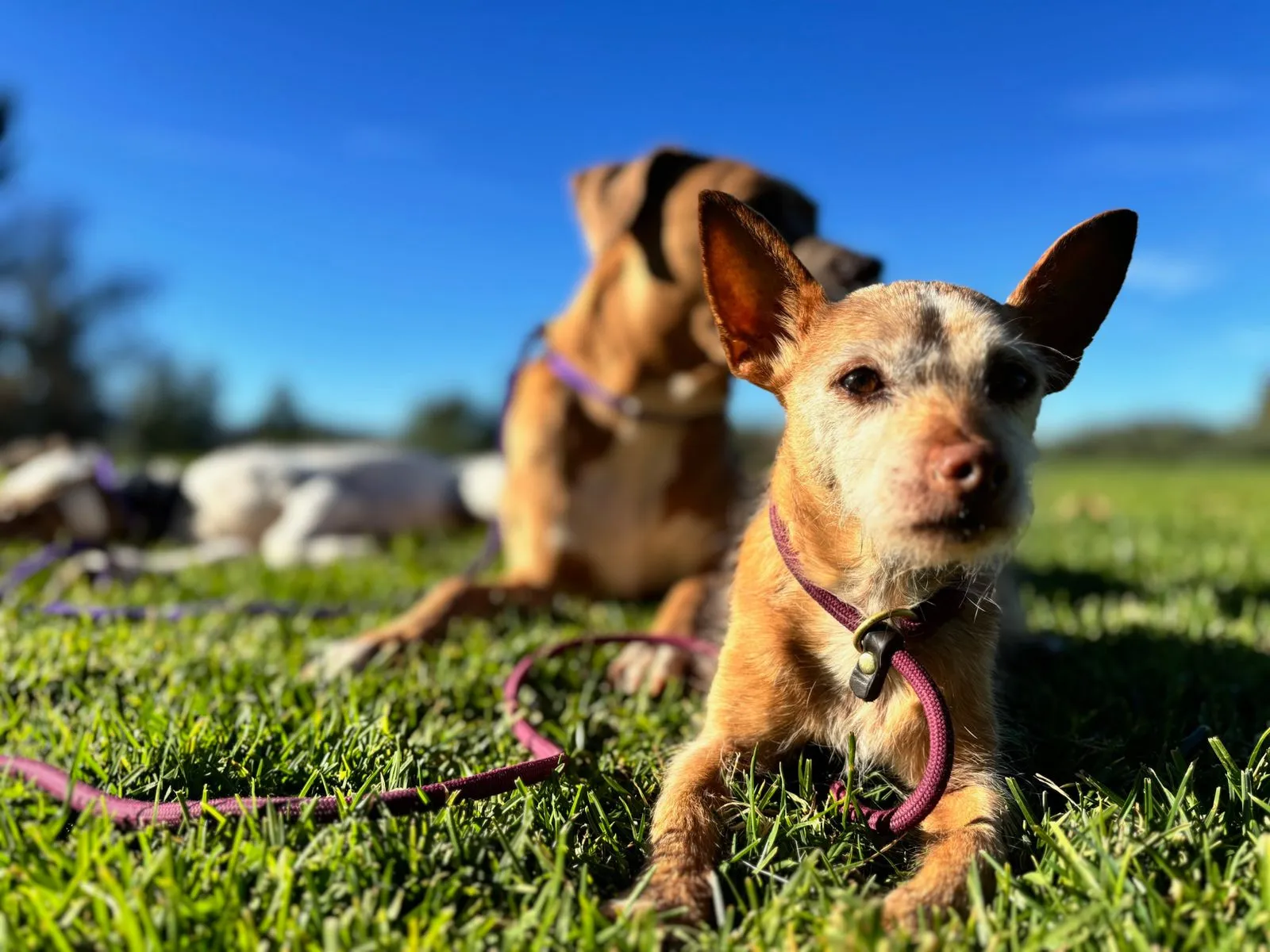
Advocating for one’s dog shouldn’t be a heated topic, after all our principal responsibilities as dog owners or handlers is protection and direction. That means the dogs in my care are not public property and my duty is to take care of their wellbeing. This means that not everyone that we see is going to get to pet them, to play with them or be able to interact with them. That should be a no brainer, right? But alas, we live in interesting times. Dogs are the last frontier when it comes to everyone having an opinion and everyone (miraculously) being right. Tell someone that they can’t pet your dog and watch as indignation starts creeping over their faces. Sometimes the refrain “but dogs love me” or “I am great with all dogs” is used in order to justify why they are different and should get to do what they want even though the dog in question does not want to be a pet. If they have children wanting to pet dogs and I happen to say ‘not now’, the disgruntlement can be even stronger. It does create an interesting question of who is in the right in situations when an innocent child wants to pet a fluffy being and the handler says no. One might guess my answer to that. So here I present my case.
Before being one of the world’s favourite pets, dogs are first and foremost complete, self contained and autonomous animals. They, like us, are social mammals that rely on their pack for protection and direction. They are not stuffed animals, they are not the reincarnation of a loved one and they are definitely not devoid of awareness and preferences about who gets to be in their space. On the contrary, like all other mammals, dogs have an instinctive perception about their intimate, personal, social and public space. That is what most people don’t seem to realise. It is not because one likes to pet a dog, that a dog necessarily likes to be pet. Very much like us humans, they allow certain people that they trust and respect in their intimate or personal space. That does not mean they are comfortable with every single person invading their intimate space (i.e petting them). Conversely, there are certain dogs that absolutely want to be pet by everyone they meet, just like there are certain people that have an innate ability to be extremely friendly with everyone they encounter. But these are exceptions, not the rule. We humans, especially when we are dealing with our young, are very protective about who we allow in our intimate space. Why do we continuously expect and allow a different behavior with our dogs when it comes to strangers invading their space? We don’t expect that from ourselves, our cats, horses, or any other being that we are responsible for. Just our dogs.
I will always be the advocate of my dogs or any dog that is in my care. That is my job: to make sure they are well taken care of, that their needs are fulfilled and respected. Since they can’t speak, I am their voice when someone insists on encroaching on their well being. How I advocate for my dogs is up to me. I don’t see the need to be disagreeable or curt. If the guys in prison were able to do it with grace, I know I can as well. It is up to us, the dog guardians, to figure out what works for us when we are standing up for what is best for our dogs. If people want to learn, we can explain. If people simply want to argue, I remind myself that I am doing this for the dog (not for myself) and simply smile and walk away. I am confident that with the right intention we can all be the best advocates for our dogs. If we were able to accomplish that in multiple prisons, doing that on the outside should be a piece of cake. Our dogs rely on us to show them the rules of the game, not letting every single person touch them should be part of those rules. How we enforce that is up to us. I choose to do it with grace.
Happy training!